Bedding Guide
Naturepedic Organic Sateen Crib Linens: Fit, Feel, and Care
A crib sheet is a small piece of fabric with an outsized job: it should feel comfortable, stay put on the mattress, and stand up to frequent washing. Here is how to assess organic cotton sateen crib linens, understand their fit, and care for them while keeping the nursery’s sleep setup simple and safe.
Published October 15, 2026
Nursery bedding invites strong opinions. One parent wants a cool, crisp surface; another prefers a smoother, softer feel. Some focus on fiber and certification, while others begin with a more immediate question: will the fitted sheet stay on the mattress? For crib linens, those concerns can be considered together, but fit and safe use come first. A sheet that feels lovely is not a good choice if it is loose, incompatible with the mattress, or used in a way that adds unnecessary bedding to the sleep space.
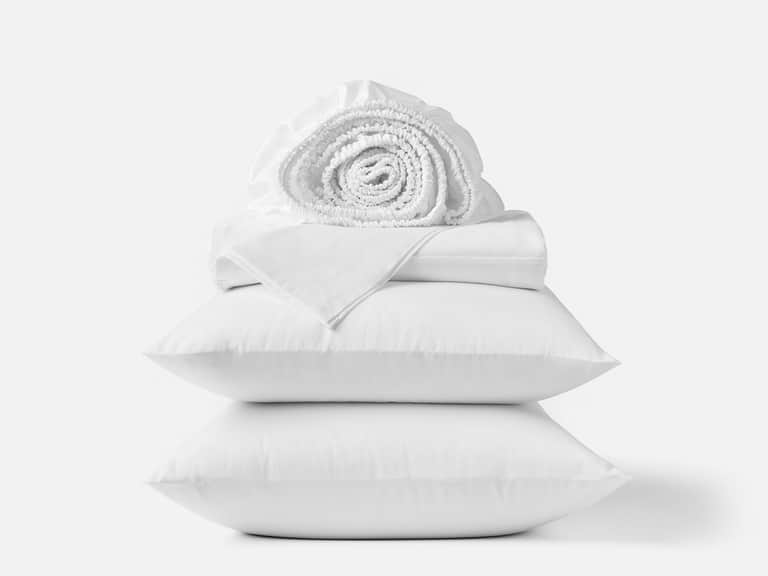
Naturepedic organic sateen crib sheets bring together several features worth understanding before choosing nursery bedding: cotton fiber, a sateen weave, a stated thread count, organic certification, and dimensions intended for a crib mattress. None of these details alone guarantees that a sheet will suit every family or every crib. The useful question is how the parts work together—and how to check them against the mattress and the care instructions supplied with the sheet.
What “organic sateen” tells you
“Organic” and “sateen” describe different things. Organic refers to the way a fiber is grown and, when a recognized certification is involved, to standards governing specified stages of production. Sateen describes the way yarns are arranged in a woven fabric. A sheet can therefore be organic cotton sateen: the first phrase identifies the fiber and its certification context; the second describes the fabric’s construction and characteristic surface.
The Naturepedic organic sateen crib sheet is described as made from 100% GOTS-certified organic cotton, with a 300-thread-count fabric. GOTS—the Global Organic Textile Standard—is a certification system for organic textiles that addresses criteria across relevant processing and manufacturing stages. Certification is more informative than an unverified “organic” claim, but it is not a promise that a product will feel a particular way, suit every sensitive skin type, or solve a health problem. It is a way to assess defined production requirements. Families who want the detail can check the certification information provided by the manufacturer and the product’s labeling.
The fiber itself matters to the experience of a sheet. Cotton is a familiar natural textile fiber, and its feel varies with the quality and length of the fibers, yarn preparation, weave, finishing, and laundering. “100% cotton” is useful information, but it does not describe all those factors. Nor does organic status, by itself, tell you whether a particular fabric will feel crisp, silky, lightweight, or substantial. That is where weave and construction enter the picture.
Sateen’s smooth hand, explained
Sateen is a weave structure, not a separate fiber. In a typical sateen construction, yarns pass over more yarns on the fabric surface than they do in a basic one-over, one-under plain weave. That arrangement can produce a smoother hand and a subtle sheen. Cotton percale, by contrast, is commonly woven in a balanced plain weave and is often described as crisp, matte, and airy. The distinction is a starting point, not a rigid rule: yarn, finishing, fabric weight, and personal preference all influence what a finished sheet feels like.
For a nursery, a smooth surface may be appealing to families who prefer a soft, gentle-feeling textile. The sateen crib sheet described here has a 300-thread-count construction. Thread count measures the number of threads counted in a square inch of fabric under a given convention; it is not a universal comfort score. A larger number does not automatically mean a better sheet, and comparisons can be difficult when manufacturers use different yarns or construction methods. The number is most useful when read alongside the fiber, weave, finishing, fit, and care details.
Breathability is also a property of the whole fabric, not a guarantee that comes from a single label. Fiber type, yarn size, weave density, finishing, and the conditions in the room all play a part. A cotton sheet may feel comfortable to one household and too warm or too cool to another. In a crib, bedding should never be treated as a substitute for following safe-sleep recommendations or for managing room temperature appropriately.
A calm, practical approach to certifications
Certification language can be useful, especially when a family is trying to make sense of materials and production claims. GOTS certification indicates that a textile has been assessed against the standard’s requirements for organic fibers and processing. It does not mean every certified item is identical in touch, durability, or performance. The label is best understood as one piece of product information, alongside the actual fiber composition and construction.
It is also helpful to separate a certification from broader promises. A sheet described as organic is not necessarily allergen-proof, hypoallergenic for every individual, or a treatment for a skin condition. If a baby has a diagnosed allergy or ongoing irritation, a caregiver should seek advice from a qualified health professional rather than relying on bedding language alone. For everyday decision-making, a clearly stated fiber content, credible certification details, and straightforward care instructions offer a more useful basis for comparison than vague claims about purity or wellness.
Fit is not a minor detail
The most important practical check is whether the fitted sheet is designed for the exact mattress being used. The listed dimensions for the Naturepedic organic sateen crib sheet are approximately 27.5 by 52 by 6 inches. Those measurements correspond to a particular crib-sheet format, but caregivers should compare them with the mattress’s own width, length, and thickness rather than assume that every product labeled “crib sheet” will fit every mattress.
Mattresses can differ in size and depth, and specialty shapes or models may require a sheet made specifically for them. The listed product information also gives separate dimensions for oval sheet versions, which is a reminder that a standard rectangular crib sheet should not be presumed to fit an oval mattress. Check the mattress label or documentation, then compare it with the sheet’s stated dimensions and intended use. When a mattress or sheet is sold as part of a system, follow the instructions for that specific combination.
The Naturepedic sateen crib sheet is described as having elastic around the entire perimeter. Full-perimeter elastic is intended to help the fitted sheet stay in place, but construction details do not replace a hands-on fit check. Install the sheet according to the manufacturer’s instructions and make sure it lies flat and taut on the mattress, with the corners fully seated. Check that it has not shifted or worked loose before using the sleep space. If the sheet does not fit securely, do not try to compensate with clips, pins, improvised fasteners, or extra layers; consult the manufacturer or choose a correctly sized sheet.
A snug fit is about more than neatness. Loose bedding can create avoidable risk in an infant sleep environment. Safe-sleep guidance from recognized public-health authorities emphasizes a firm, flat sleep surface with a fitted sheet and no loose blankets, pillows, stuffed toys, or other soft objects in the crib. Follow current guidance from your pediatric health professional and public-health organizations, as well as the instructions for your crib and mattress. This article is general bedding information, not medical advice.
How to choose between sateen and percale
Choosing a weave is partly a matter of touch. A caregiver who likes smooth, draping cotton may lean toward sateen. Someone who prefers a drier, crisp feel may find percale more appealing. In broad terms, percale’s plain weave tends to create a matte, fresh-sheet character, while sateen’s structure often produces a smoother surface and more visible sheen. Neither is automatically superior, and neither should be selected solely because of a thread-count claim.
For crib linens, the decision should be kept straightforward. First confirm that the sheet is intended for the mattress. Then consider the stated fiber, any certification that matters to your household, the feel you prefer, and whether the washing instructions fit your routine. If possible, touch the fabric in person or review a return policy before buying. A sample or a return option can matter more than a long list of adjectives, because words such as “silky,” “cool,” and “soft” are subjective and may not predict how a fabric feels after several washes.
Washing and everyday care
Nursery sheets are workaday textiles. They may need frequent laundering, so a sensible care routine should protect the fabric without becoming elaborate. The Naturepedic sateen crib-sheet information describes the sheet as machine washable and dryer-friendly, while the product details specify machine washing warm, tumble drying low, no ironing, and no bleach. Always read the current sewn-in label and product instructions first; they take priority over general advice, particularly if the manufacturer updates its guidance.
- Wash before first use if the care label permits, using the instructions supplied with the sheet.
- Use a suitable amount of detergent and avoid overloading the washer so the fabric can move freely.
- Choose the stated wash temperature and drying method. For this sheet, the listed guidance is warm machine washing and low tumble drying.
- Avoid bleach if the product instructions say not to use it. Do not add fabric treatments unless the label permits them.
- Remove the sheet promptly after drying and fold it or place it directly on the mattress, so it is ready for use.
- Keep a second correctly sized fitted sheet available if your household’s routine makes quick changes useful.
Detergent does not need to be marketed specifically for babies to be appropriate. What matters is the product label, the needs of the household, and thorough rinsing when needed. If a child shows persistent irritation, stop using any suspected product and seek appropriate medical guidance. “Natural” or “gentle” marketing terms are not a substitute for checking ingredients or talking with a clinician when a concern persists.
Stains, spills, and the case for prompt attention
Small spills are an ordinary part of caring for an infant. When a sheet needs attention, act promptly where practical, but do not use aggressive stain treatments that conflict with the care label. Blot or rinse as appropriate for the substance and fabric, then launder according to the manufacturer’s directions. Heat can set some stains, so it may be sensible to check whether a mark remains before moving a sheet from washing to drying. If it does, follow a fabric-safe approach rather than applying an untested chemical or mixture.
Repeated hot washing, high-heat drying, harsh bleaching, and overuse of softeners can affect textiles over time. The listed care for this sateen sheet calls for low tumble drying and no bleach. Avoiding unnecessary heat and chemical treatments can help maintain the fabric’s surface, though no care routine can guarantee a fixed lifespan. Elastic can also lose resilience with use. Inspect it periodically, along with seams and corners, and replace a sheet if it no longer fits securely or shows damage that affects its function.
Build a safer nursery around the sheet
A crib sheet is one part of a sleep setup, not a complete safety system. Keep the mattress and crib in good condition, use products according to their instructions, and avoid adding soft accessories to the sleep surface. A fitted sheet should be the sole bedding layer on the mattress for infant sleep, unless current professional guidance for a specific medical situation says otherwise. The broader nursery may be styled with blankets or cushions for display, but those items should not be left loose in the crib during sleep.
Caregivers may also move between homes, use a second crib, or rely on a travel sleep space. In each case, verify the mattress dimensions and product compatibility again. A sheet that fits one crib mattress may not fit another. Labels such as “standard” are useful shorthand, but measured dimensions and manufacturer instructions are the more dependable guide.
A quick checklist before purchase
- Confirm the mattress: Check its width, length, and depth, then compare with the sheet’s dimensions.
- Check the shape: Make sure a rectangular, oval, or other specialty sheet matches the actual mattress.
- Read the materials: Look for the stated fiber content and weave, not just a comfort adjective.
- Understand the certification: Treat GOTS as a defined textile certification, not a blanket health claim.
- Consider the feel: Sateen is generally smoother in character; percale is often crisper and more matte.
- Review care instructions: Make sure the laundering routine is realistic for your household.
- Check the fit after installation: The sheet should be taut, fully seated, and secure before the crib is used.
The bottom line
Naturepedic organic sateen crib linens combine organic cotton, a smooth sateen construction, and a fitted design intended for a crib mattress. The listed sheet dimensions—approximately 27.5 by 52 by 6 inches—make careful mattress matching essential. Its full-perimeter elastic is a useful construction feature, but the decisive test is whether the sheet stays taut and secure on the specific mattress without adjustment or improvisation.
For families considering organic crib bedding, GOTS certification can provide meaningful information about specified textile production standards. The sateen weave offers a different feel from percale, but touch is personal, and a 300-thread-count label should be interpreted in context rather than treated as a quality verdict. Follow the product’s washing instructions, inspect the sheet regularly, and keep the infant sleep surface clear of loose bedding and extras. In the nursery, the best sheet is not the one with the grandest promise. It is the one that fits properly, suits the household’s preferences, and can be cared for as directed.